EQX Connected Devices
Year
2025
Role
Lead Visual Designer
Platform
In-club devices, iOS
Team
Product, Engineering, Hardware
Scope
End-to-end experience, Design system, Interaction model
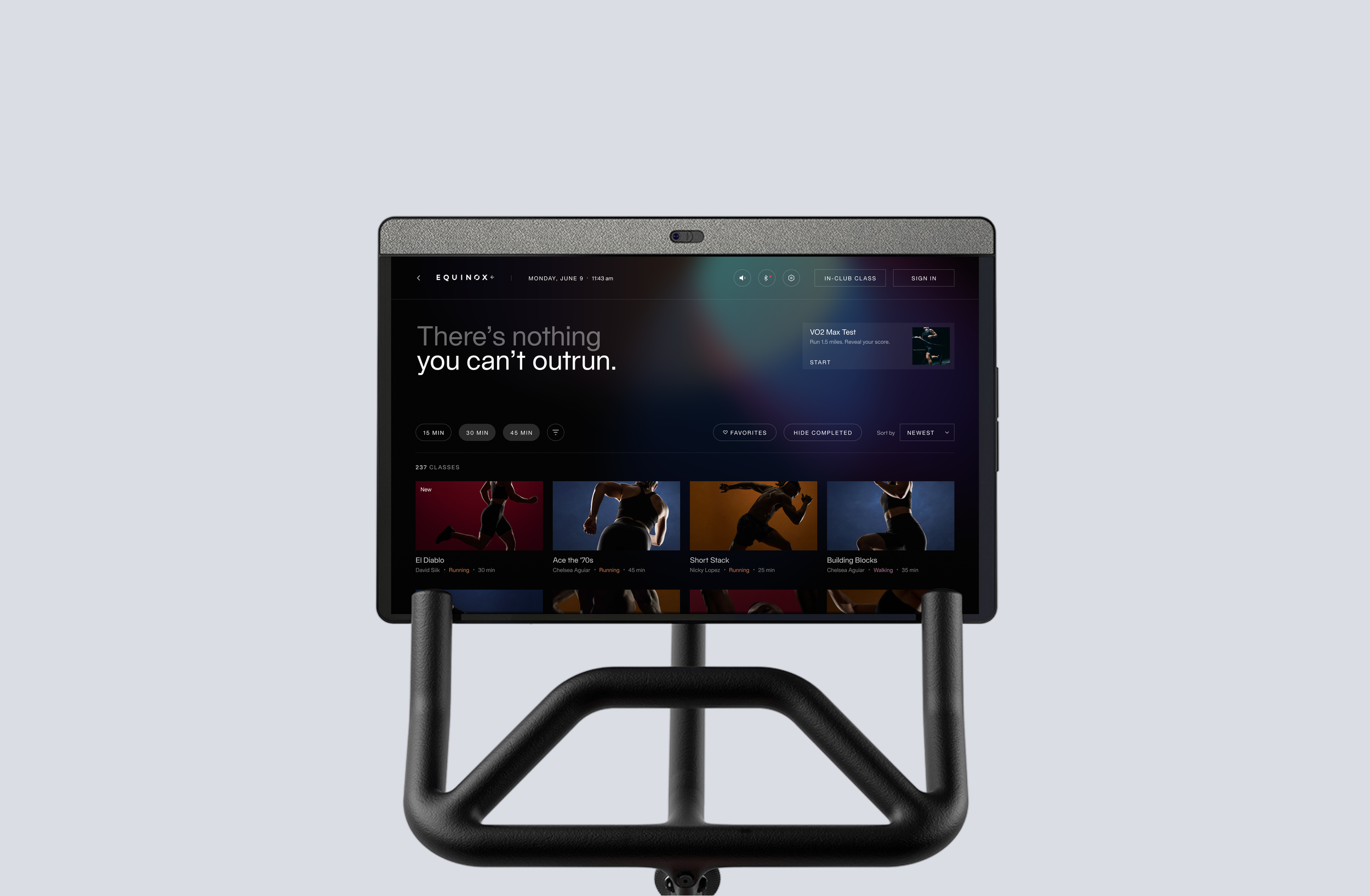
This project focused on designing a real-time training interface that bridges digital guidance with physical performance. The experience supports users during live workouts and extends into performance tracking and post-session insights, creating a continuous loop between effort, feedback, and progress.
As Lead Visual Designer, I defined the visual language and interaction patterns across both in-club devices and supporting digital surfaces, ensuring clarity, speed of understanding, and consistency in high-focus environments.
The Existing Problem:
Designing for in-club usage introduced a different level of constraint. Users interact with the interface while physically engaged, often under time pressure and fatigue. Existing patterns lacked clarity at a glance, making it difficult to quickly interpret key metrics like time, output, and targets.
At the same time, the experience needed to feel immersive and aligned with the premium, performance-driven nature of the brand.
The interface also had to work within physical and environmental constraints—distance from the screen, motion, sweat, and limited interaction time—requiring information to be readable and actionable in seconds.
Project Goal & my Role
As Lead Visual Designer, I shaped the experience around reducing cognitive load while maximizing clarity in motion. I distilled complex performance data into its most essential elements through strong hierarchy, large typography, and high-contrast visuals that can be understood instantly.
I defined a system of visual states using color and motion to communicate intensity and progress, while keeping interactions minimal to support uninterrupted workouts. At the system level, I ensured the UI scaled across in-club devices and mobile, maintaining consistency in layout, spacing, and motion across different contexts.
Guided Workout Flow
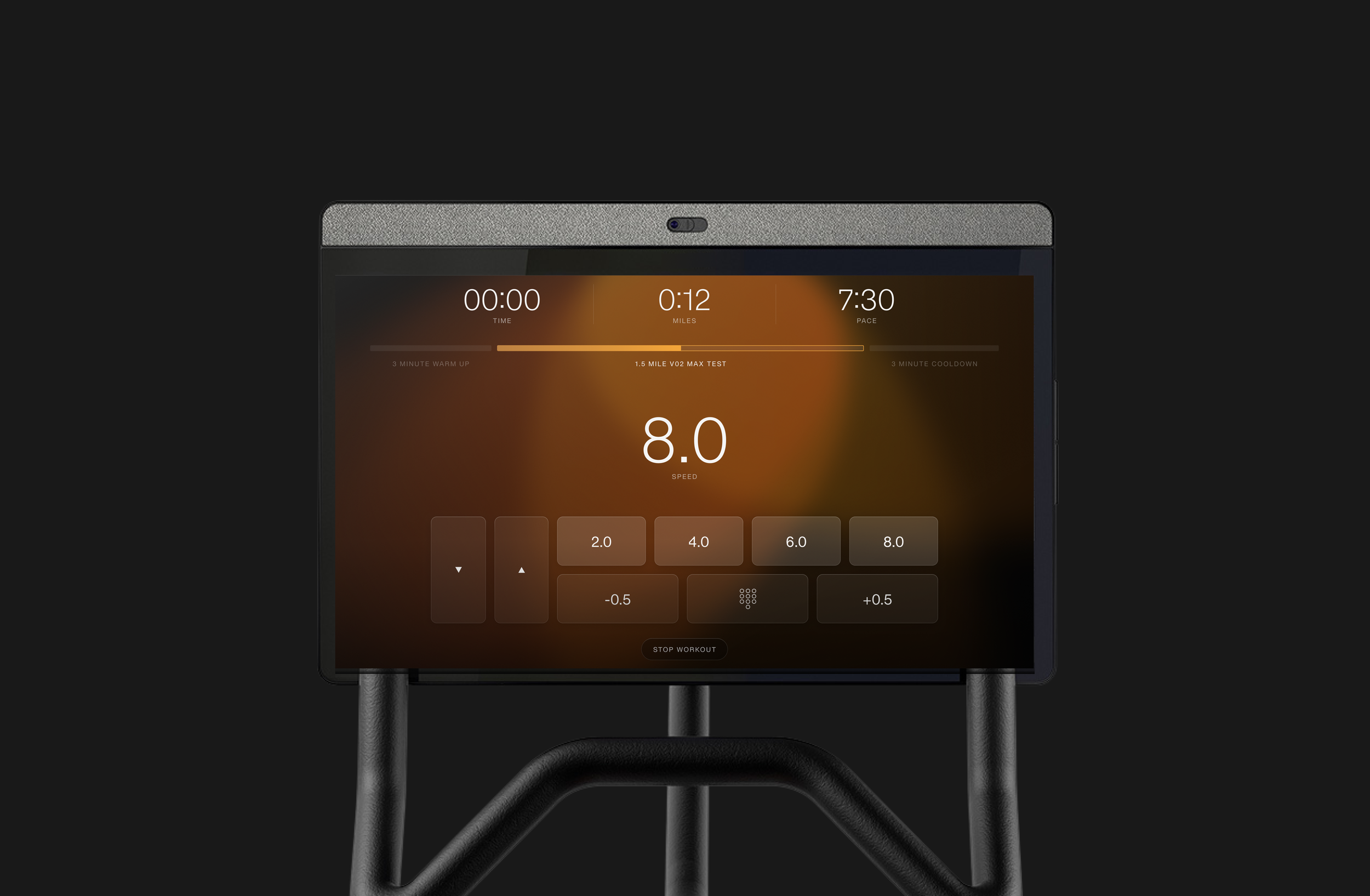
We structured the in-workout experience as a guided, step-by-step flow that minimizes cognitive load during high-focus moments. Key metrics like time, speed, and intervals are surfaced through strong hierarchy, while controls are grouped and simplified for quick adjustments. This allows users to stay focused on performance while making precise, real-time decisions without distraction.
Real-Time Control & Clarity
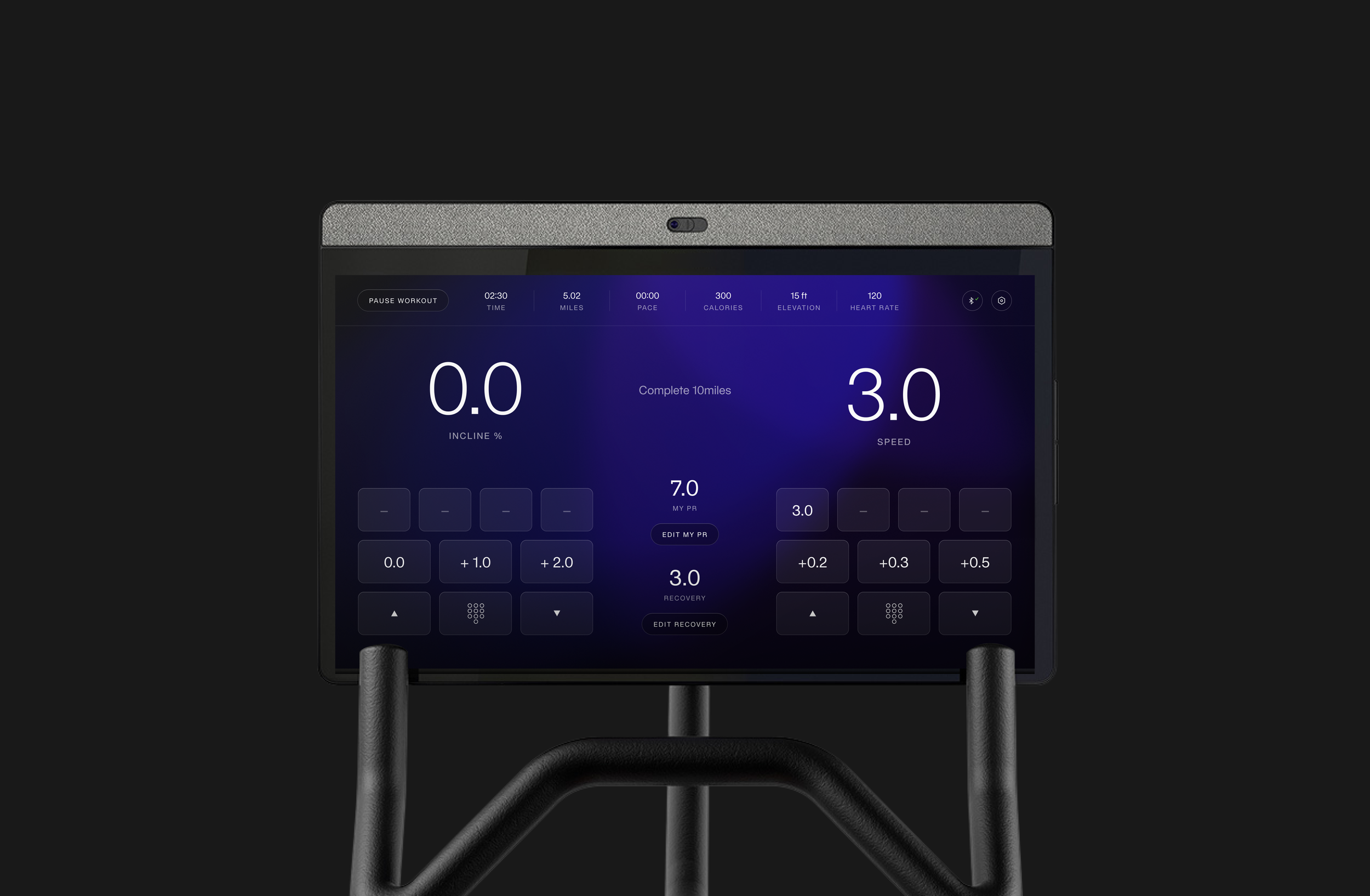
Controls and performance data are designed for immediate readability and quick interaction. Speed, incline, and interval adjustments are presented through consistent, tactile patterns, making changes intuitive even mid-workout. Clear visual feedback reinforces each action, helping users stay in control while maintaining focus on performance.
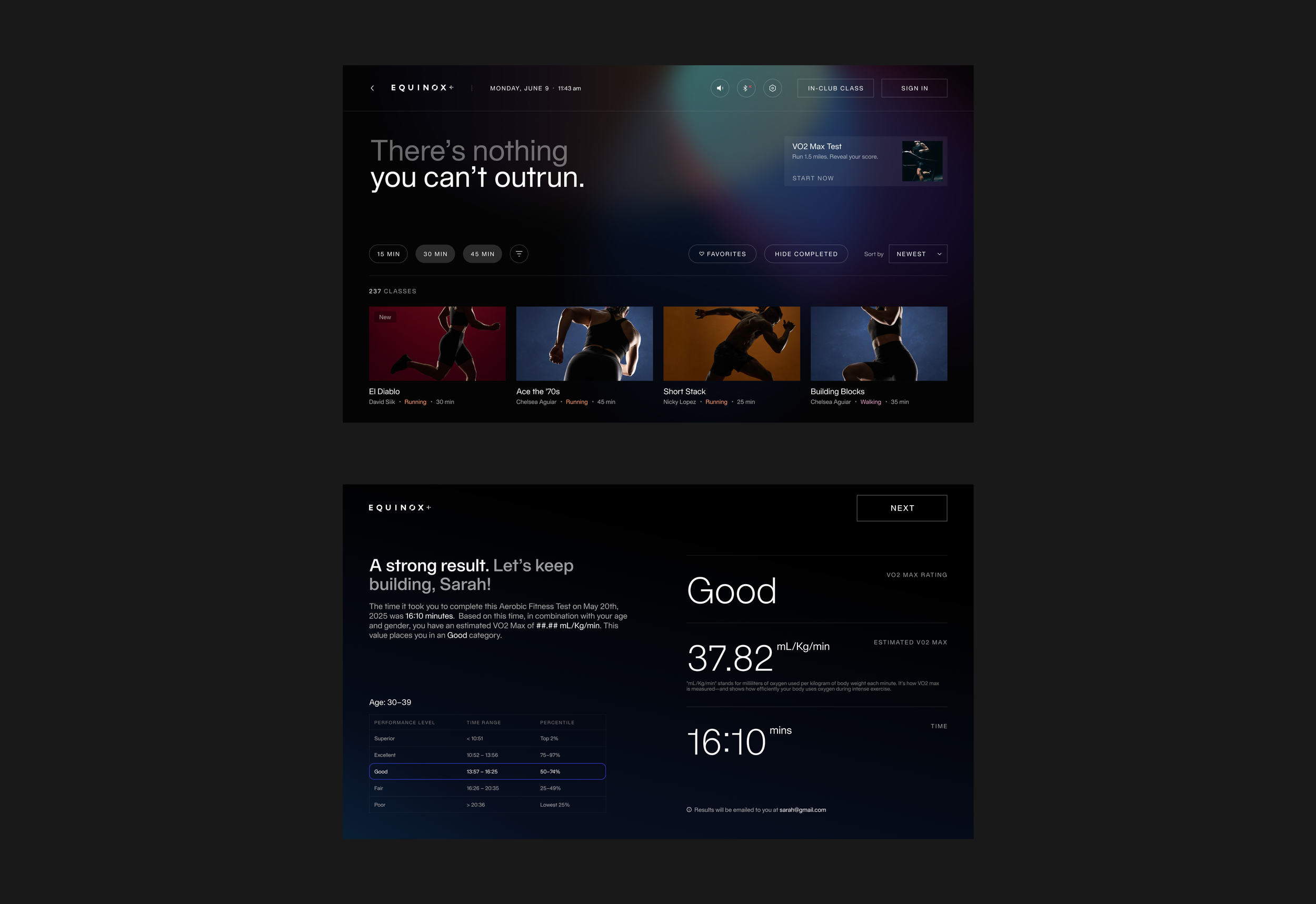
System-Driven UI
The experience connects discovery and performance into a seamless journey—from finding the right class to understanding results. The discovery layer is designed to inspire action while remaining easy to navigate, using strong visuals and structured content to help users quickly explore and select sessions.
This flows into a results experience where performance data is translated into clear, meaningful insights through hierarchy and focused metrics. Together, the system reinforces a continuous loop between exploration, effort, and progress.
Color as Feedback
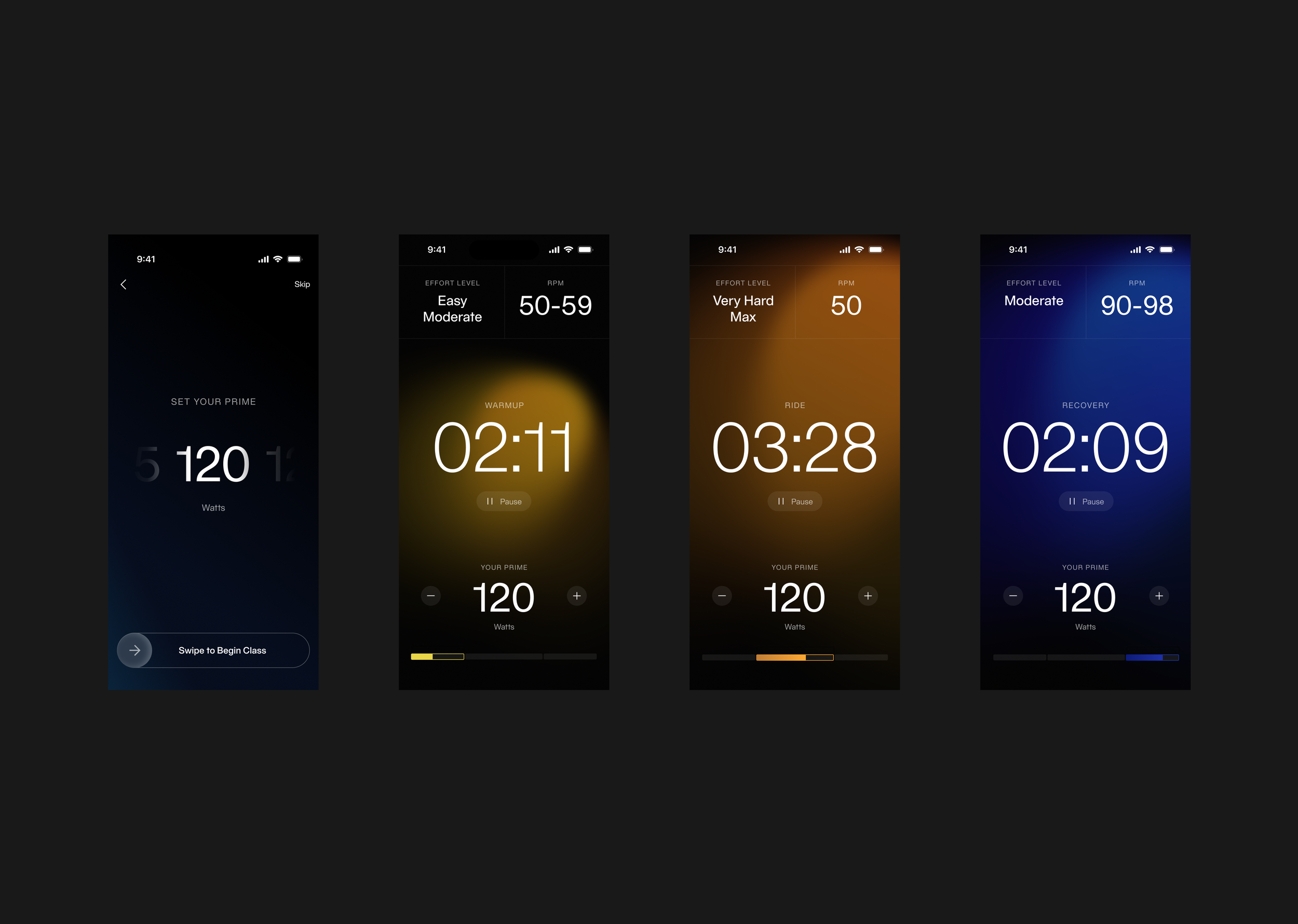
Color is used as a performance signal rather than decoration. Warmer tones represent higher intensity, while cooler tones indicate recovery and lower effort. Combined with motion and scale, color helps users understand their workout state instantly, even in motion or from a distance. The dark interface reduces visual noise and keeps focus on key metrics.
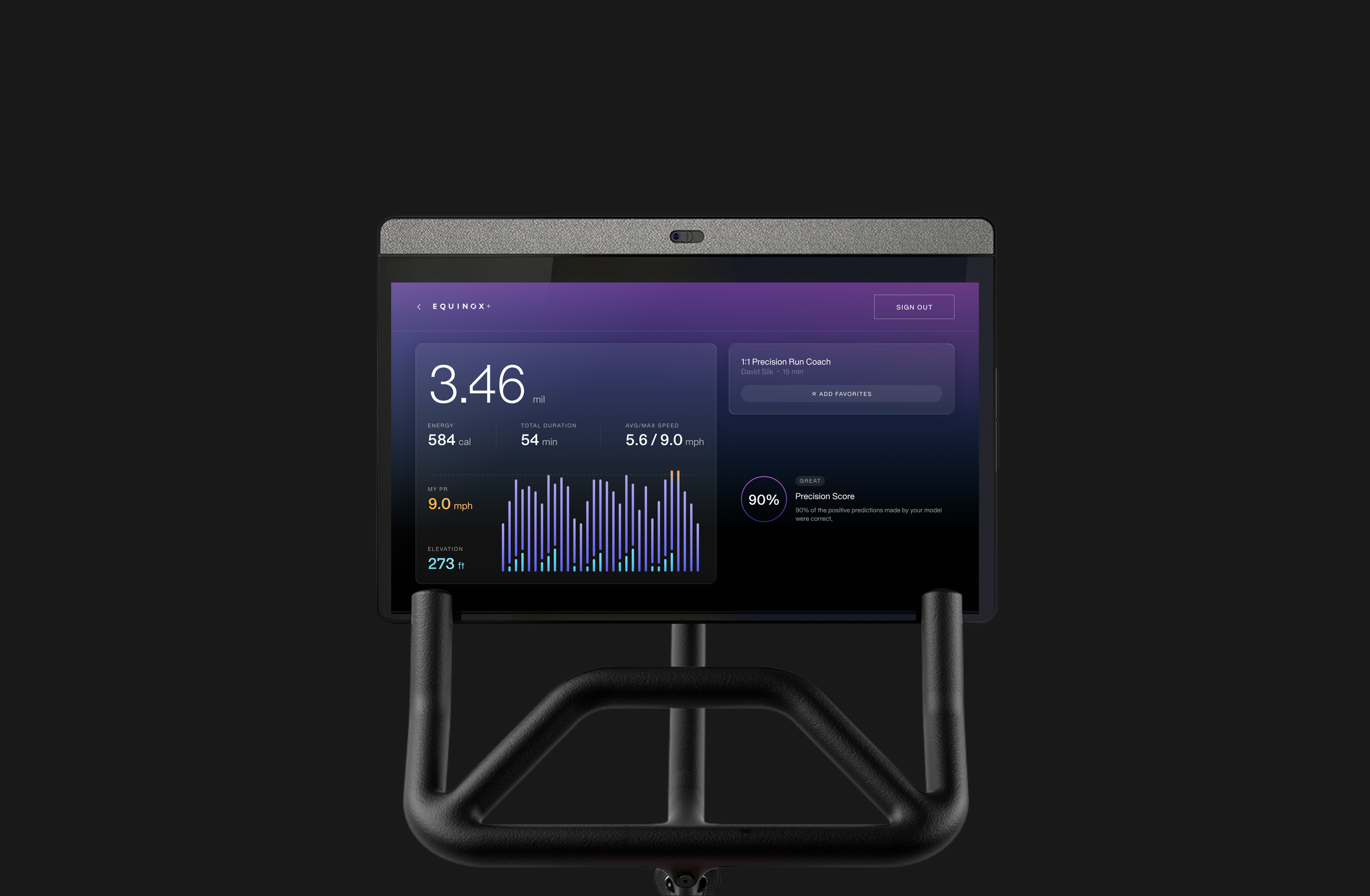
Result Page
The results screen translates performance data into clear, motivating feedback. Strong typography, color, and hierarchy highlight key metrics and personal records, while data visualization helps users quickly understand their performance and long-term progress.
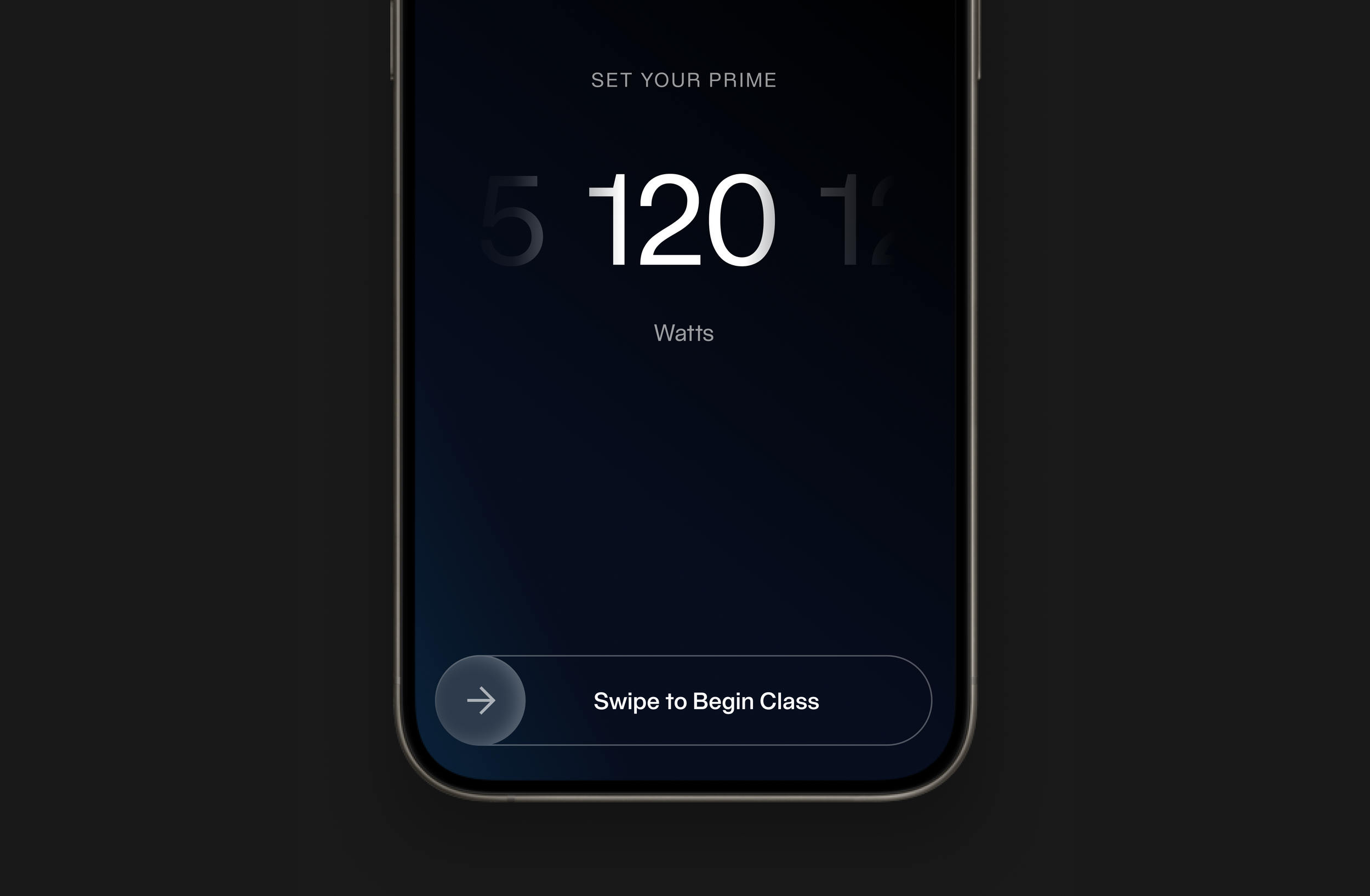
Setting the Baseline for Performance
I led the visual design of the workout entry by focusing on a single critical moment—setting the user’s baseline. The interface prioritizes one key metric at a time, using scale, contrast, and motion to guide attention without distraction. A simple swipe interaction replaces traditional controls, creating a more natural transition into the workout while establishing a sense of momentum and intent from the very first action.
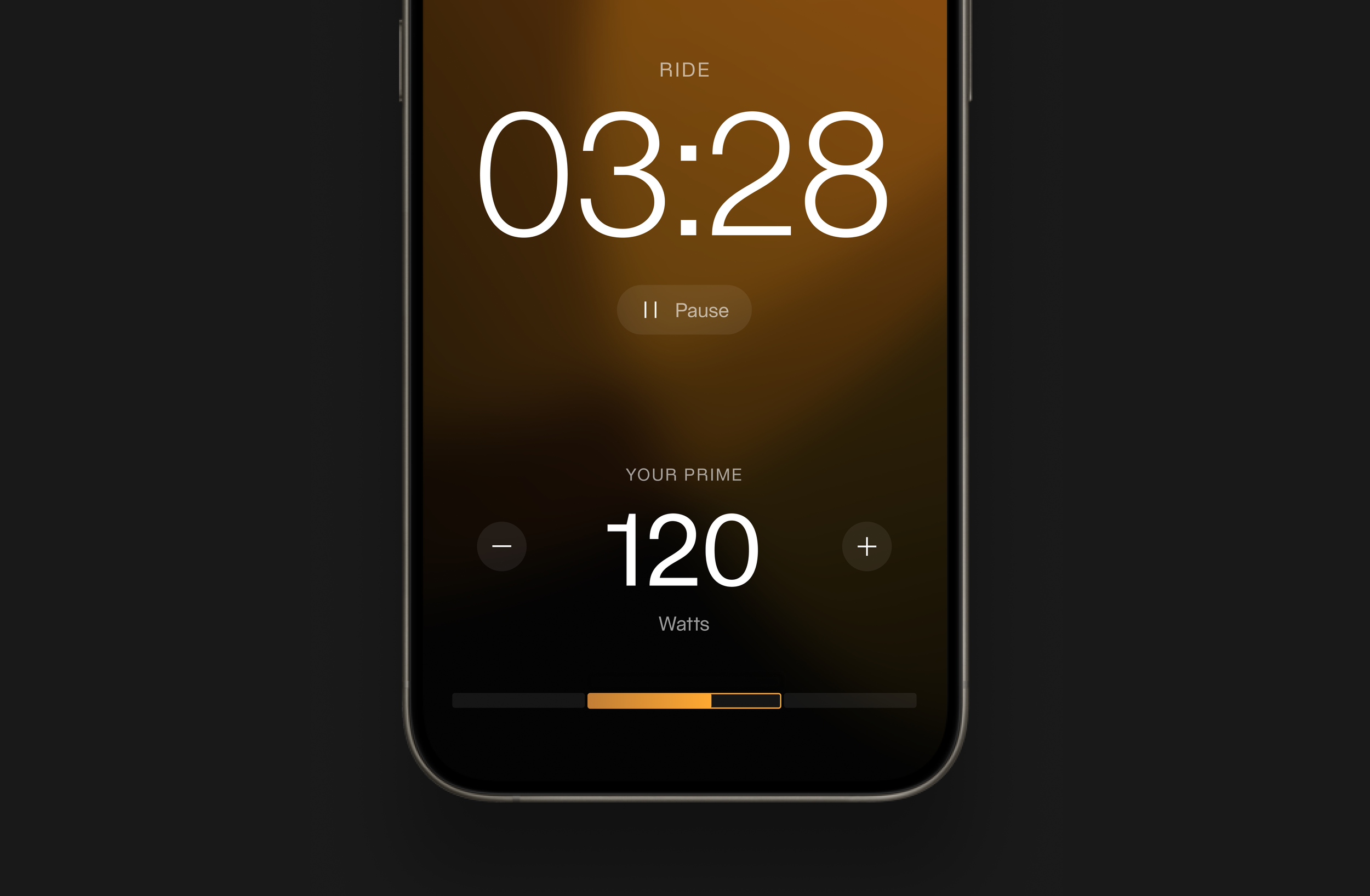
Real-Time Control, Simplified
I designed the in-session experience to surface only what matters in motion—time, effort, and control. The UI adapts to the workout state, shifting emphasis between countdown, performance metrics, and adjustable intensity without overwhelming the user. Direct, tactile controls allow quick adjustments, ensuring users stay focused on performance while maintaining full control of the session.
The redesigned experience improves real-time readability and reduces friction during workouts, allowing users to stay focused on performance rather than navigating the interface. It elevates the perceived quality of the in-club experience and strengthens alignment between physical and digital touchpoints, while providing a scalable system for future training features.
This project required a shift from traditional mobile design thinking to designing for physical environments and real-time interaction. The challenge was not adding more information, but removing anything that didn’t directly support performance. As a lead, my focus was on creating an interface that feels effortless in use, where clarity, rhythm, and feedback work together to support the user at every moment of their workout.